
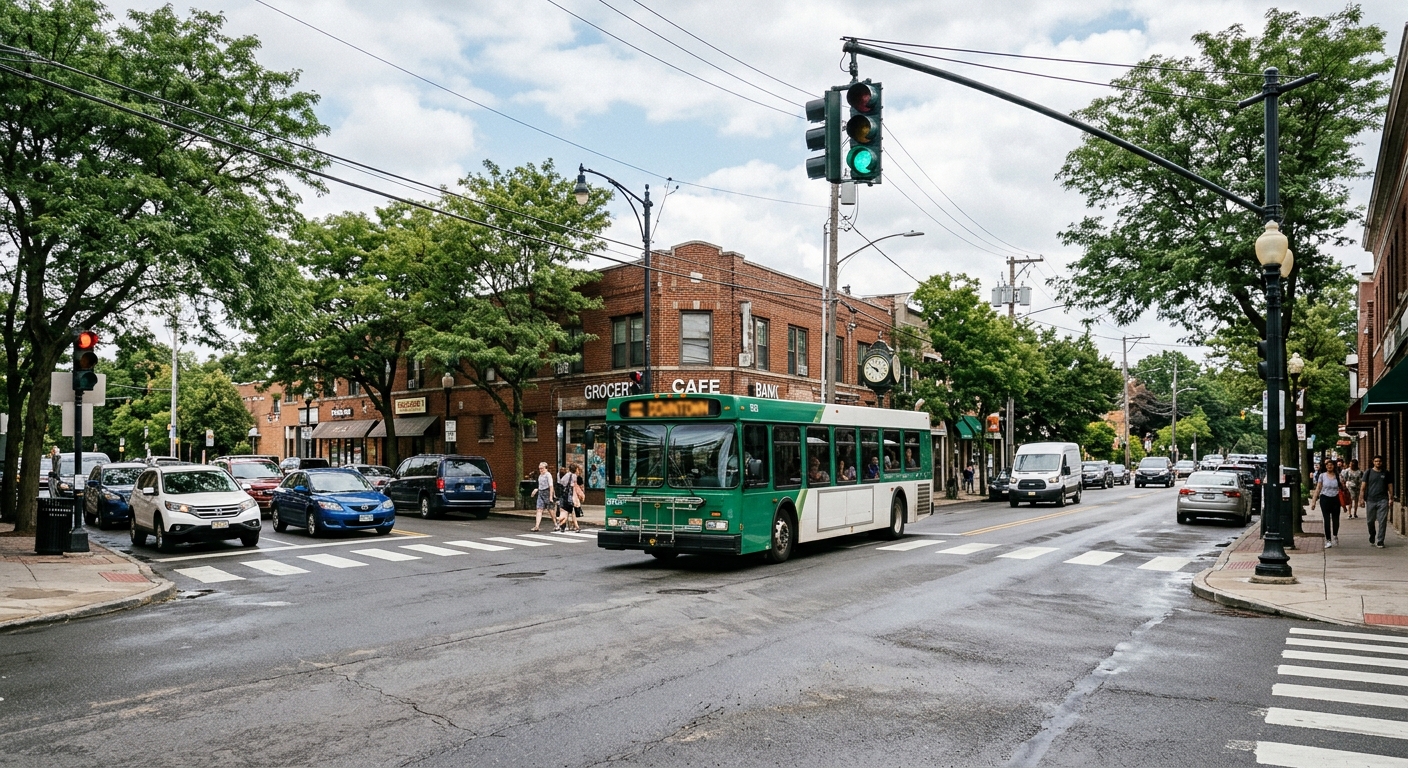
AI-generated illustration; not a photograph of the reported event.
- calendar_today November 24, 2026
New Technology Shortens Bus Waits at Busy Intersections
South Burlington has begun testing an innovative transit signal priority system designed to help Green Mountain Transit buses move more efficiently along the city’s busy Dorset Street corridor. The initiative aims to reduce delays for public transit riders by leveraging real-time data and responsive traffic light technology.
How Transit Signal Priority Works
The system, developed by California-based company LYT, detects each approaching bus’s real-time location and calculates its estimated time of arrival at intersections. This information is transmitted to traffic signals, which then adjust their phases to provide a green light for the bus’s approach. The system aims to minimize the additional wait faced by cross traffic and maintain overall traffic flow.
According to Erica Towle, South Burlington’s public works director and a key figure in the project, this approach is distinct from signal preemption technology commonly used for emergency vehicles. Whereas preemption overrides existing light patterns entirely, this priority system balances the needs of buses and other road users, granting priority while limiting disruptions to the usual signal cycle.
Pilot Program Scope and Implementation
Since June, the city has deployed the technology at four Dorset Street intersections: Barnes & Noble, Market Street, the Blue Mall, and Garden Street. Market and Garden streets connect to major destinations such as the University Mall and Trader Joe’s, making them central to transit and commercial activity in the area.
The No. 1 and No. 11 bus routes, operated by Green Mountain Transit, were the focus of the pilot. The No. 1 is the agency’s busiest, connecting downtown Burlington with the University of Vermont and nearby shopping hubs.
Significant Reductions in Bus Wait Times
Early data has shown marked improvements. Outbound buses, traveling from downtown Burlington, previously waited an average of 66 seconds at the four Dorset Street intersections. With the signal priority system, that number has dropped to 22 seconds. Inbound buses saw average wait times fall from 74 seconds to just 11 seconds.
This represents a reduction of at least 65% in time spent waiting at red lights for these key routes. The No. 11 “City Connector” route has experienced similar benefits, according to city officials. Green Mountain Transit reported approximately 45,000 riders on the No. 1 route in each of the previous two months.
Minimal Impact on Other Traffic
While the technology makes travel more efficient for buses, its impact on other vehicles has been minor. Data from the pilot indicates that cross traffic at affected intersections has experienced at most four additional seconds of wait time, on average. Towle noted that the city has not received any complaints from drivers about increased delays.
"I’ll wait for an extra four seconds. I am one person in my vehicle. They are 25 people in one vehicle," Towle remarked, highlighting the broader benefit to transit users.
Cost, Future Expansion, and Transit Goals
The pilot project cost a total of $16,256, with South Burlington covering $9,756 and Green Mountain Transit funding the remainder. Both Towle and Green Mountain Transit’s planning director, Chris Damiani, hope to extend the pilot into 2027, pending a final decision on funding.
Damiani acknowledged that the reduced wait times may seem modest on a per-intersection basis, but emphasized that cumulative savings—particularly if the technology is implemented citywide—could have a meaningful impact on service reliability and driver schedules. The Dorset Street corridor was chosen for the pilot due to its proximity to new high-density development, where officials are encouraging public transit use.
As Damiani put it, "Minutes really do matter for us." He indicated that Green Mountain Transit seeks to deploy the technology at more locations, where incremental improvements could add up to significant benefits for riders across the network.
Source: vtdigger.org.


