- calendar_today August 20, 2025
.
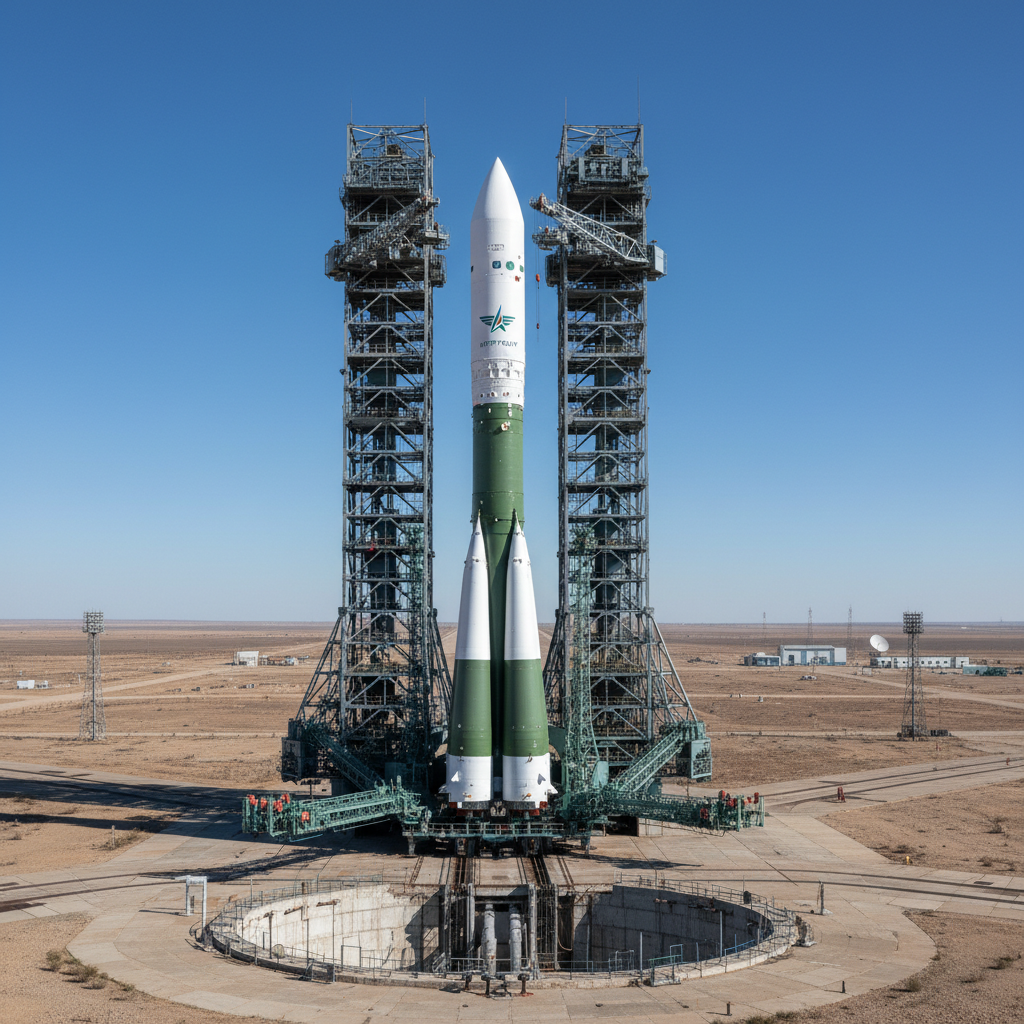
Russia is preparing to launch its newest rocket, the Soyuz-5, on its first flight before the end of the year. Dmitry Bakanov, the director of the Roscosmos space agency, confirmed the news in an interview with the state media outlet TASS.
“Yes, it’s a December task,” Bakanov told TASS. “Everything is ready for it.”
The launch will take place from the Baikonur cosmodrome in Kazakhstan. If successful, it would be the first flight of the Soyuz-5 rocket, which has been in development for more than a decade. Roscosmos plans a series of demonstration launches for the rocket, but officials do not expect to begin regular service before 2028.
Old Roots, New Pride
The Soyuz-5, also known as Irtysh, is not a breakthrough design. Instead, it reuses elements of older Soviet technology. Engineers started developing the new rocket in 2016 and reused much of the underlying ideas, but they are moving production of the rocket entirely within Russia.
It is a significant change. Russia has long purchased rocket components from Ukraine, particularly for the Zenit-2 launch vehicle. Zenit was developed by the Yuzhnoye Design Bureau of Ukraine in Dnipro in the 1980s and it launched dozens of missions into the 2010s. Ukraine built its first and second stages, while the main engine was Russian—the RD-171 from the NPO Energomash.
Ukraine and Russia remained partners on the rocket after the fall of the Soviet Union. That relationship came to a halt after Russia invaded Ukraine in 2022. In late 2023, Moscow went as far as to destroy the Ukrainian factory that built Zenit rockets.
The Soyuz-5 is essentially a larger, fully Russian version of the Zenit. With Soyuz-5, Moscow puts an end to its long dependence on Ukraine for rocket components.
Power and Performance
Soyuz-5 is a medium-lift launch vehicle. It is capable of delivering about 17 metric tons to low-Earth orbit. It has a slightly larger fuel capacity compared to the Zenit-2, and that allows it to lift more weight into space.
The star of the show is the RD-171MV engine, the largest in the new rocket. This latest version is based on the engine design developed for the Soviet Union’s Energia program in the 1980s, which launched the Buran space shuttle. The RD-171MV is a descendent of the RD-171 that was used in Zenit.
The new engine has no Ukrainian-made components, unlike previous models. It is powered by kerosene and liquid oxygen. The amount of thrust it produces is huge: over three times the thrust of a Space Shuttle main engine. The RD-171MV is considered to be the most powerful liquid-fueled rocket engine in the world today.
The new rocket, on the other hand, is expendable. Many of its competitors, most notably SpaceX’s Falcon 9, use reusable designs for their rockets. The difference calls into question whether the Soyuz-5 will be able to compete in the long run.
Russia’s Stakes in Soyuz-5
Roscosmos has plans to use the new rocket to replace both the Zenit and the older Proton-M. This would allow Moscow to maintain its launch capability without having to rely on other countries.
Funding for Russia’s space program has been in decline for years as resources have been shifted to the war in Ukraine. Even so, Russia has pushed Soyuz-5 to the launch pad.
Experts are skeptical. The new rocket is a stopgap that allows Russia’s space program to continue operating. However, it does not move beyond its older concepts. The real leap forward would be the Soyuz-7, also known as the Amur project. This would be a vehicle with a reusable first stage and engines that run on methane as fuel. If finished, it would have a chance to compete with the world’s most modern rockets.
The problem is that Amur has seen repeated delays. Its first flight is now not expected until at least 2030. Soyuz-5 is likely to remain the only game in town for at least the rest of this decade.
A Market Challenge
It remains to be seen if Soyuz-5 will be able to find customers outside of Russia. The global market for commercial launches is now led by SpaceX, and increasingly by Chinese companies. Both offer competitive prices and, in some cases, reusable rockets.
Russia has continued to use its Soyuz-2 launch vehicle for crewed missions and the Angara family for heavier payloads. Neither has found much foreign business, and both have suffered from poor service records. For Soyuz-5 to succeed in the commercial market, it will have to demonstrate that it is reliable and cost-effective. That is a tall order in a competitive market.
The Outlook
The upcoming demonstration flight of the Soyuz-5 rocket will be a closely watched event. If it launches in December and performs as expected, it would show that Russia is still able to manufacture new space hardware despite economic sanctions and budget constraints.
The Soyuz-5 is not likely to revolutionize the space launch industry. For Roscosmos, however, it is a symbol of independence, continuity, and survival in difficult times.
For now, all eyes are on Baikonur. If the rocket flies, it will start a new chapter in Russia’s space story, written with old pages from the past.