- calendar_today August 24, 2025
Season 2 of The Sandman Captures the Magic of the Graphic Novels
Netflix’s live-action adaptation of the critically acclaimed Neil Gaiman graphic novel series The Sandman has come to a close with the release of its second and final season. Season 1 fans will be happy to know that, like its predecessor, this finale also successfully translates the surreal, “eye of the mind” tone of the book to the screen. The series is a loose anthology like the comics, but with enough grounded momentum focused on the trajectory of the Dream King to keep it from feeling episodic.
Fans who suspected that Netflix would kill the show after its first season were proven wrong in January when the streamer announced Season 2. There were murmurs that the potential cancellation might have been tied to a sexual assault allegation against Gaiman that he has denied, but showrunner Allan Heinberg addressed the speculation in a post on X (formerly Twitter), writing, “The decision was made in early January… The two-season plan has been in place from the beginning, and we all felt we had enough material for two seasons.” Heinberg’s estimate, as it turns out, was right on the money.
Season 1 adapts the first two Sandman story arcs, Preludes and Nocturnes and The Doll’s House, and two bonus episodes based on the one-shot issues “Dream of a Thousand Cats” and “Calliope” from the book Dream Country. Season 2 adapts Seasons of Mists, Brief Lives, The Kindly Ones, and The Wake. Scenes from Fables and Reflections, namely “The Song of Orpheus” and the story arc’s final three issues, are also incorporated into the season. The popular, standalone Sandman spinoff, Death: The High Cost of Living from 1993, was adapted for the final bonus episode. A Game of You was completely absent, as were several short stories. Neither omission will have any bearing on the Sand King’s arc, which wraps up at the end of Season 2.
Season 1 ends with Morpheus having won his most basic battles: escape from captivity, recovery of his talismans, defeat of the escaped Corinthian (Boyd Holbrook), and avoidance of a Vortex-level apocalypse. Season 2 opens with Morpheus (Tom Sturridge) piecing together a patchwork Dreaming after returning from his ten-year absence. He is visited out of the blue by his sister Death (Kirby Howell-Baptiste) and, by the usual protocol in matters of Endless business, summoned by her to a family powwow with Desire (Mason Alexander Park), Despair (Donna Preston), and Delirium (Esmé Creed-Miles).
There, Morpheus is put on notice by Destiny (Adrian Lester), who, despite her prominence in the Sandman series, makes a rare family appearance to put her brother in his place. Dream is ordered to go rescue Nada (Umulisa Gahiga), the queen of the First People and his former lover, from Hell, where he had banished her, and reconcile with her or else face Destiny and the rest of the Endless as judge and jury in a family trial. This sets Dream up for a rematch of sorts against Lucifer (Gwendolyn Christie), who, it turns out, is still bitter about losing her “worshiper” to Dream back in Season 1. Instead of a knock-down, drag-out battle this time around, however, Lucifer resigns in the presence of the rest of the Endless, gives her brother the key to an empty Hell, and leaves him to choose his new successor for the underworld, with options ranging from the gods Odin, Order, and Chaos to the demon Azazel.
Delirium, who opens the episode lamenting that her brother Destruction (Barry Sloane) left his realm centuries ago and has never been seen since, sets Dream on the trail to his eventual demise, where, again, he will have to spill family blood and face the wrath of the Furies, also known as the Kindly Ones.
Highlights, Lowlights, and the Goodbye
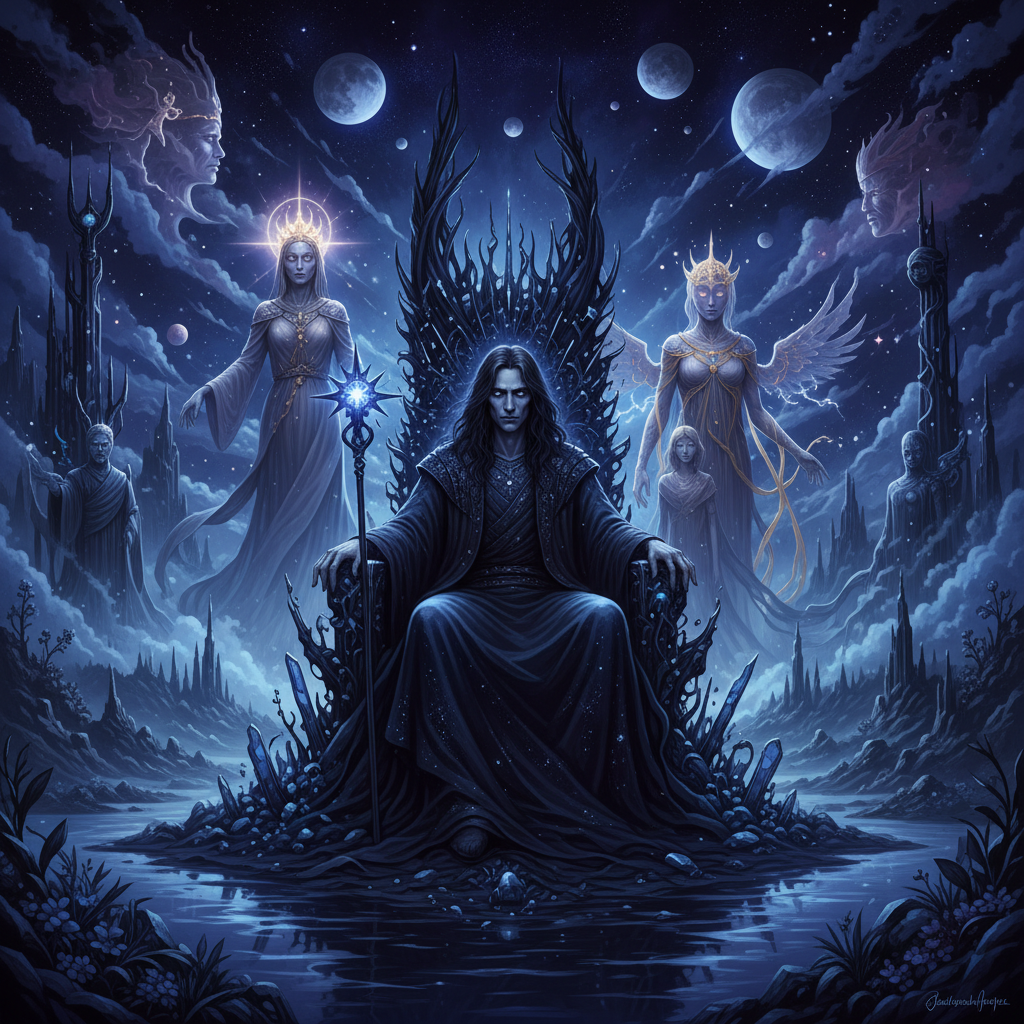
Production values are as high as ever in Season 2, as is the casting and visual design, which so strongly evokes the graphic novel art, it’s sometimes as if you can see Gaiman’s pencil strokes coming off the screen. Some viewers have complained of a languid pace. The decision to take their time is part of the vision, however, and as is often the case with Sandman, allows for richer world-building.
The low point is in the episode “Time and Night” when Dream goes to his parents, Time (Rufus Sewell) and Night (Tanya Moodie), for assistance. Canonicall,y this is all true (The Endless are their children after all), but these interactions feel more forced than mythic, like a parent-therapy session, even for the usually scene-stealing Sewell.
Highlights: Lucifer asking Dream to cut off her wings; the goddess Ishtar (Amber Rose Revah) casting aside all her mortal deceptions in one final dance as a goddess; Dream walking William Shakespeare through The Tempest; and a reformed Corinthian feeling something for Johanna Constantine (Jenna Coleman). Other key moments include the mournful song of Orpheus in the Underworld; Dream mercy killing his son; and the heartbreaking rage of the Furies, who lay waste to Dream’s Fiddler’s Green (Stephen Fry), Mervyn Pumpkinhead (Mark Hamill), and Abel (Asim Chaudhry).
Dream’s death at the hands of his brother is again peaceful as he takes Death’s hand for the last time and passes. The mantle of Dream falls to a new host in the end—the only human ever conceived in the Dreaming: Daniel Hall (Jacob Anderson), son of Daphne (Joely Richardson) and Unity Kinkaid. Daniel is confused and in over his head when we first meet him, but is, nevertheless, an exceptional Dream incarnate. The siblings collectively grieve their loss and show Daniel the path of welcome into the fold as a member of their collective.