
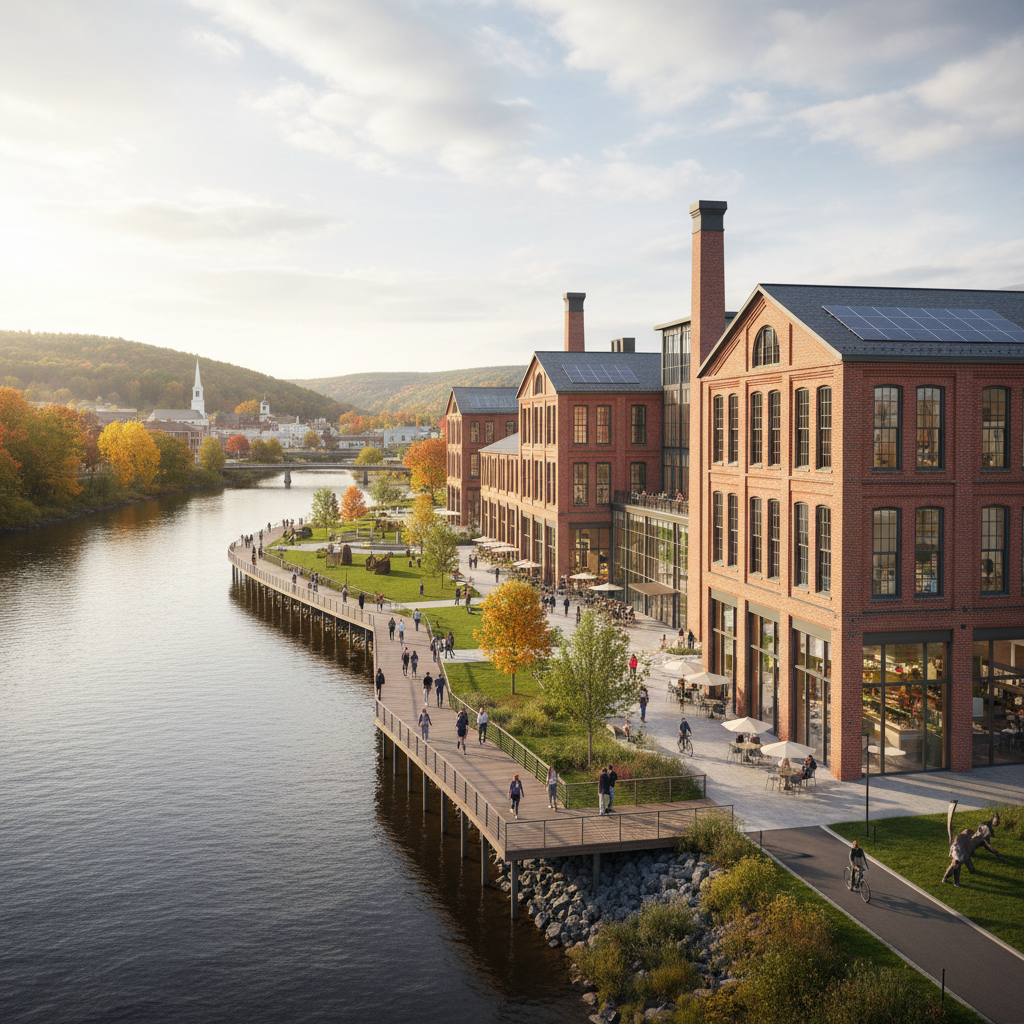
AI-generated illustration; not a photograph of the reported event.
- calendar_today April 8, 2026
New England is undergoing a notable transformation, as industrial revolution mills—once the pulse of the region’s industrial progress—are being reimagined for modern use while preserving their storied past. Across mill towns from Rhode Island to Maine, these historic centers of industry are now vibrant hubs for community, culture, and innovation.
The Blackstone River Valley: Cradle of American Industry
Stretching through Rhode Island and Massachusetts, the Blackstone River Valley holds a prominent place in mill history. At its heart lies the Old Slater Mill, established in 1793 as the first water-powered cotton spinning mill in the United States. Recognized today as a National Historic Landmark, the site stands as a testament to the origins of American industry and is a focal point for industrial heritage and education. Surrounding towns, deeply rooted in the legacy of new england mills, have embraced mill revitalization through museums, event venues, and community centers housed in restored mill buildings.
Southington and Factory Square: Local Businesses Thrive
In Connecticut, Southington’s Factory Square exemplifies how historic mills can be reimagined for modern needs. Once an industrial site, the large brick complex now hosts a variety of local enterprises, dining establishments, and entertainment spaces. The adaptive reuse of these mill buildings encourages social engagement while honoring the textile mills that shaped the town’s identity. This blend of the past and present draws residents and visitors alike, strengthening the area’s cultural fabric.
Lowell, Massachusetts: A Living Museum of Mill History
Lowell stands as a unique example among New England’s mill towns, having been planned specifically for industrial manufacturing in the early 19th century. Today, its nationally recognized mill museums—most notably the Boott Cotton Mills Museum—offer immersive experiences showcasing both the technological advancements and the social dynamics of the industrial revolution mills. Visitors can take guided tours along preserved canals and visit interactive exhibits, fueling industrial tourism and education across generations.
Woodstock, Vermont: Small-Town Pride in Mill Legacy
Though smaller in scale, Woodstock, Vermont, boasts an impressive dedication to repurposing sites of mill history. Former textile mills and manufacturing structures have been skillfully transformed into recreational areas, galleries, and spaces for cultural events. These efforts reflect both an appreciation for the town’s industrial heritage and an enduring commitment to community wellbeing—qualities celebrated throughout new england mills.
Manchester, New Hampshire: Amoskeag Mills Repurposed
Manchester’s skyline was long defined by the sprawling Amoskeag Manufacturing Company, once among the world’s largest textile mills. The legacy endures as the historic mill buildings—preserved for architectural and historical significance—find new life as breweries, museums, and university facilities. These efforts underscore ongoing mill revitalization and attract both locals and those interested in industrial tourism. This model shows the value of heritage preservation for economic and cultural growth across New England.
Biddeford, Maine: Community Flourishes Amid Mill Relics
In Biddeford, Maine, a key center of New England’s industrial era, repurposed historic mills contribute to a dynamic downtown and a strong sense of local identity. The Biddeford Mills Museum preserves and exhibits artifacts from the area’s mill history, while nearby businesses and event spaces draw on the architectural beauty of the old mill buildings. The interconnectedness of cultural events, commerce, and historic preservation highlights the enduring impact of industrial revolution mills on daily life in the region.
A Living Legacy in New England’s Mill Towns
The transformation of industrial revolution mills across New England illustrates how the region’s mill heritage continues to shape its communities. Through the adaptive reuse of historic mills—now home to businesses, museums, and vibrant cultural organizations—these towns honor their past while building a sustainable, community-focused future. Residents, local leaders, and visitors alike are invited to discover the evolving world of mill revitalization and the stories embedded in the walls of these iconic structures.


