- calendar_today August 8, 2025
New England’s real estate landscape offers a mixed outlook for 2025.
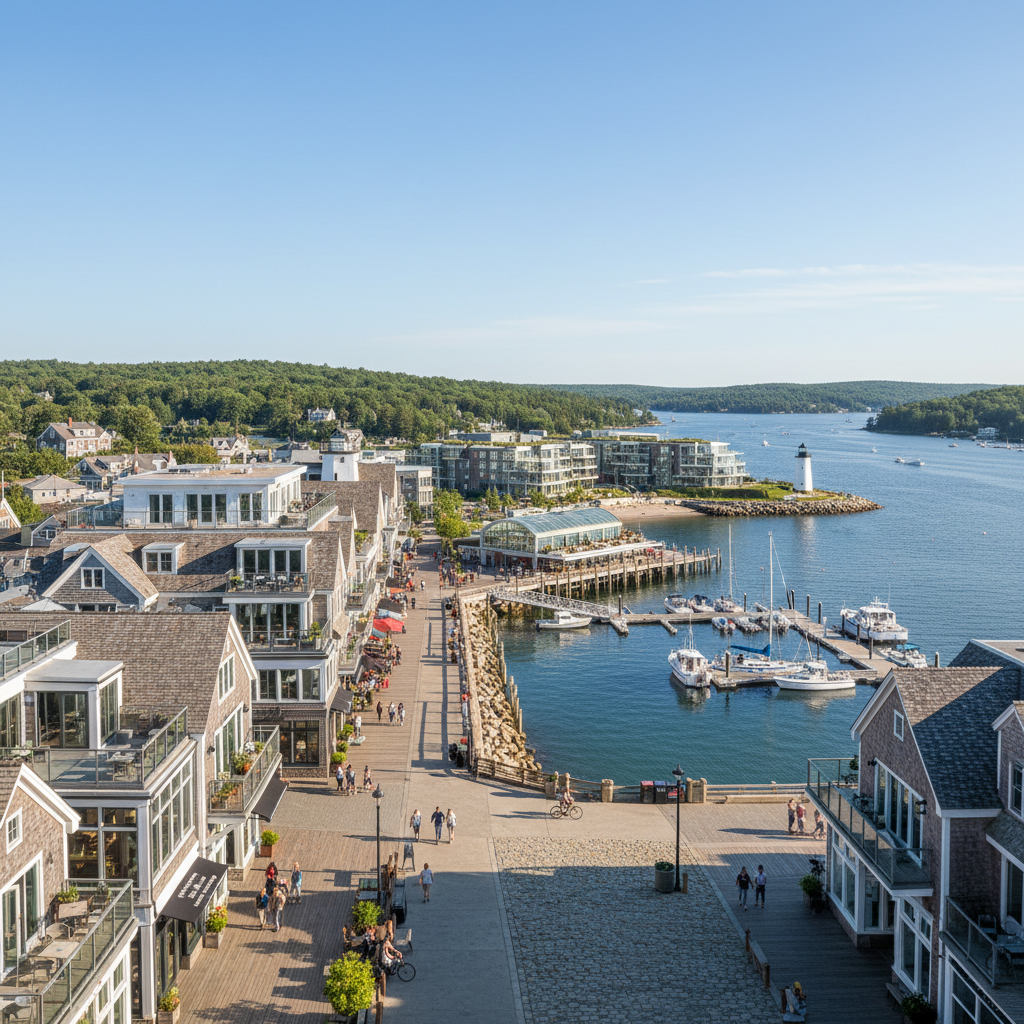
As 2025 progresses, the real estate landscape across New England is experiencing subtle shifts, shaped by national economic headwinds, climate realities, and regional migration. From Boston’s biotech corridor to Portland’s waterfront developments, real estate is evolving — and fast.
Whether you’re a commercial developer, investor, renter, or homebuyer, staying ahead of the curve requires understanding the broader shifts reshaping the market this year.
1. Mortgage Rates May Ease — But Relief Will Be Modest
After spiking past 7% in early 2024, mortgage rates are expected to gradually ease through 2025, assuming the Federal Reserve moves forward with anticipated rate cuts. In New England, where home prices in cities like Cambridge, Stamford, and Portsmouth remain elevated, even a half-point drop can make a difference in monthly affordability.
Still, the days of sub-4% interest rates are unlikely to return. As a result, many prospective buyers — especially in high-cost areas like Metro Boston — are recalibrating expectations or delaying purchases altogether.
2. Smaller Cities and Towns Are Gaining an Edge
While Boston and Hartford remain commercial anchors, smaller cities like Manchester (NH), New Haven (CT), and Burlington (VT) are seeing a surge in attention. The reasons? Lower overhead costs, a rising remote-work population, and increasing investment in infrastructure.
For investors, this shift means new opportunities in secondary markets where rental demand and office space repurposing are driving mixed-use development.
3. Commercial Real Estate Faces a Rebalancing Act
The region’s commercial sector is entering a period of reassessment. Office vacancies in downtown Boston and Providence have risen, with many firms downsizing their physical footprints.
In response, developers across New England are rethinking space, turning outdated Class B offices into life sciences hubs, co-working clusters, or multi-family housing. Suburban office parks, once in decline, are also being revived as hybrid-friendly campuses.
4. Rental Market Remains Strong, Especially in Core Cities
With homeownership out of reach for many, the rental sector continues to grow. Rents are rising fastest in Boston, Worcester, and Portland, driven by a shortage of multifamily units and a steady stream of college graduates, young professionals, and remote workers.
Meanwhile, build-to-rent developments are beginning to appear in parts of Connecticut and Rhode Island, catering to renters seeking more space without the long-term commitment of a mortgage.
5. Technology Is Reshaping Real Estate Transactions
Across New England, real estate professionals are leaning into AI-driven tools and PropTech platforms. Buyers are using predictive pricing models and chat-based virtual assistants to browse listings and apply for loans. Brokers are turning to machine-learning algorithms to better price properties and match them with qualified leads.
The adoption of digital closing platforms and AI-enhanced CRM systems is expected to grow sharply in 2025, particularly among younger agents and boutique firms.
6. Affordability Challenges Are Driving Policy Innovation
Housing affordability remains one of the region’s top real estate challenges. Massachusetts and Vermont have introduced local zoning reforms to encourage multi-family development, while cities like Stamford and Providence are experimenting with public-private partnerships to convert vacant commercial properties into housing.
Still, critics argue that progress is too slow to meet demand. Entry-level inventory remains limited, and income growth has not kept pace with rent or home prices.
7. Climate Risk Is Starting to Reshape Regional Investment Patterns
With rising sea levels, more frequent flooding, and growing wildfire risks in northern forests, climate factors are becoming central to real estate investment decisions. In New England’s coastal towns, insurance premiums are spiking or being dropped altogether, affecting everything from home prices to commercial underwriting.
Buyers and developers are showing growing interest in inland towns and eco-resilient construction, with green building certifications gaining traction among both residential and commercial projects.
A Market Redefining Itself
The New England real estate market in 2025 is not about boom or bust, it’s about realignment. As economic pressures, technological tools, and demographic shifts continue to shape activity, the market is moving toward a more decentralized, innovation-driven future.
Those who succeed, whether buying, renting, or investing, will be the ones who adapt early, stay informed, and remain flexible as this historic region rewrites the rules of real estate.