
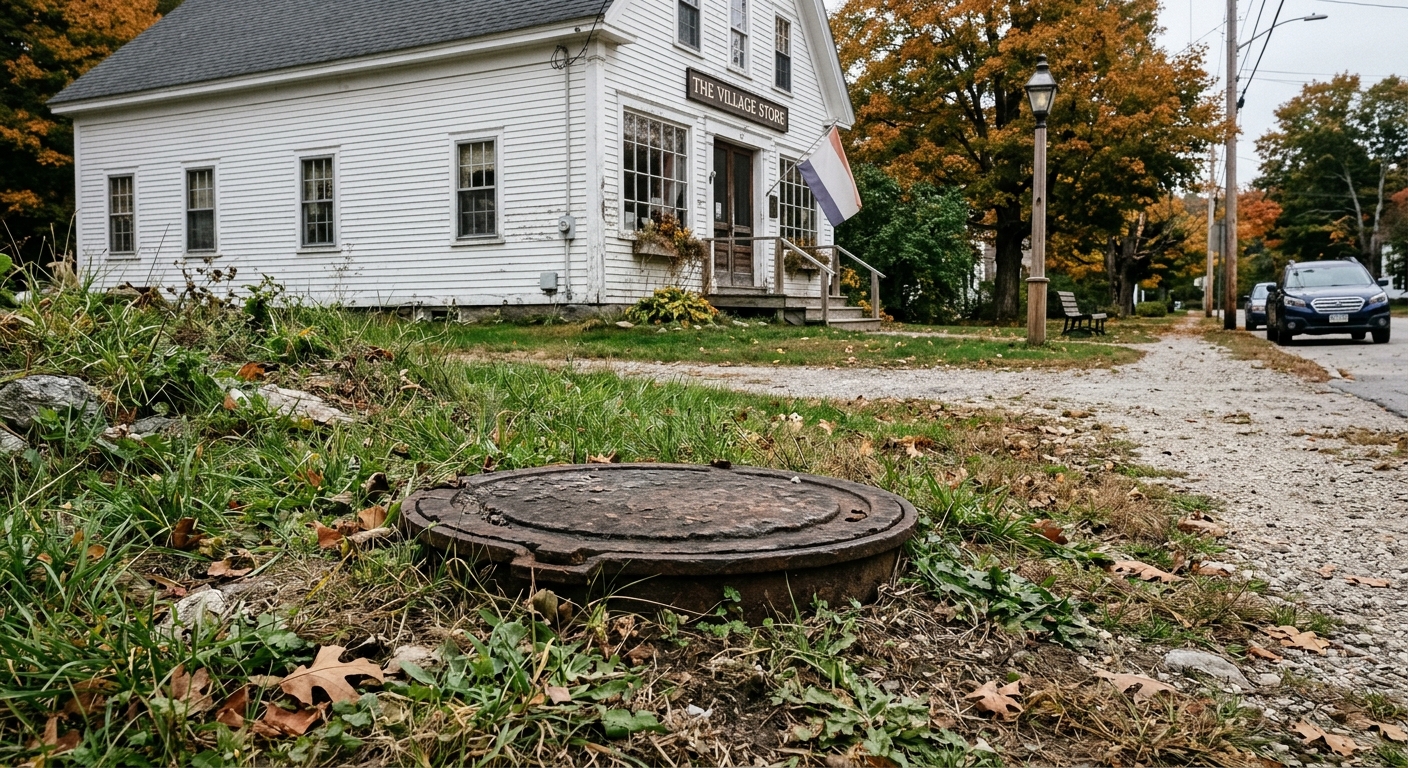
AI-generated illustration; not a photograph of the reported event.
- calendar_today October 30, 2026
A Picturesque Village Center with a Hidden Problem
Carlisle, often admired for its Colonial charm and pristine village center, is grappling with a significant and long-standing sewage crisis. While its scenic common and enduring architecture evoke images from centuries past, beneath the surface lies a complex wastewater contamination problem that could, in the words of some residents, render the area uninhabitable.
Septic System Failures and Contaminated Wells
The root of the crisis stems from widespread septic tank failure. Carlisle lacks a public water supply and sewer system, and instead relies on individual septic systems and wells. While this works on large rural lots, the high-density village center has aging septic tanks and wells situated closely together. This proximity has led to E. coli infiltration in the town's wells and alarms over drinking water quality at the Town Hall, library, and school.
Backyard mounds of earth are now a common sight, as residents hope their makeshift filters will prevent further wastewater contamination. Yet, concerns persist that the land is simply unable to safely handle residential waste at this density, particularly as the town's fractured bedrock can speed up the flow of contaminants from leaching fields into wells.
The Attempt to Revive Ferns Market Exposes Larger Issues
The underlying issues became harder to ignore in 2025, when Ben and Amy Pirri, recent arrivals to Carlisle, attempted to reopen Ferns Market—the village’s only general store and a community hub for over 180 years. What began as a straightforward business plan quickly unraveled as the Pirris discovered insurmountable waste disposal challenges. The store relied on a composting toilet, as local septic options would risk contaminating adjacent wells; the underlying problem, they realized, was reflective of the entire village center's infrastructure.
Attempts to connect Ferns to nearby septic systems or use adjacent public parkland failed due to inadequate capacity or environmental concerns. The last option was to link Ferns to the wastewater treatment plant serving the local school, but uncertainty surrounded whether this plant could handle the added load.
Controversy and Community Debate Around Solutions
When a data spike at the school plant suggested possible unauthorized wastewater dumping, the debate intensified. Despite differing accounts among town officials and residents, it was ultimately concluded the plant could accommodate the increased flow from Ferns. Still, skepticism persisted—especially regarding the potential for expanded sewer infrastructure to invite more development and alter the village’s cherished character.
Longtime builder Angus Beasley compared Carlisle’s regulatory environment to a “gridlocracy,” where countless volunteer committees can halt progress on infrastructure. The Pirris’ efforts to address the carlisle sewage problem have drawn both support and criticism, highlighting ongoing community concerns about the pace and impact of change.
Seeking a Path Forward
The Pirris, now focused on broader sewage infrastructure reform, have advocated for connecting private properties in the center to the school’s wastewater treatment plant. They have engaged in public outreach and participated in forming a committee that includes representatives from various town bodies. Evidence of environmental health hazards, such as recent instances of E. coli in municipal wells, has lent urgency to their mission.
Some residents, committees, and the Select Board have shifted towards cautious acceptance of exploring new solutions. Interest has grown from other parties, such as the public library and homeowners, to potentially join in any centralized treatment initiative.
Upcoming Vote May Decide Village’s Future
The future of Carlisle’s village center now rests on an impending townwide vote scheduled for November 16. Residents will determine whether municipal funds should be allocated for engineering and design of a sewer line connecting the center to the existing wastewater treatment plant. The decision could have lasting consequences for carlisle village center, shaping how the community addresses village septic systems and prepares for lingering environmental health hazards.
Source: boston.com.


