- calendar_today August 23, 2025
.
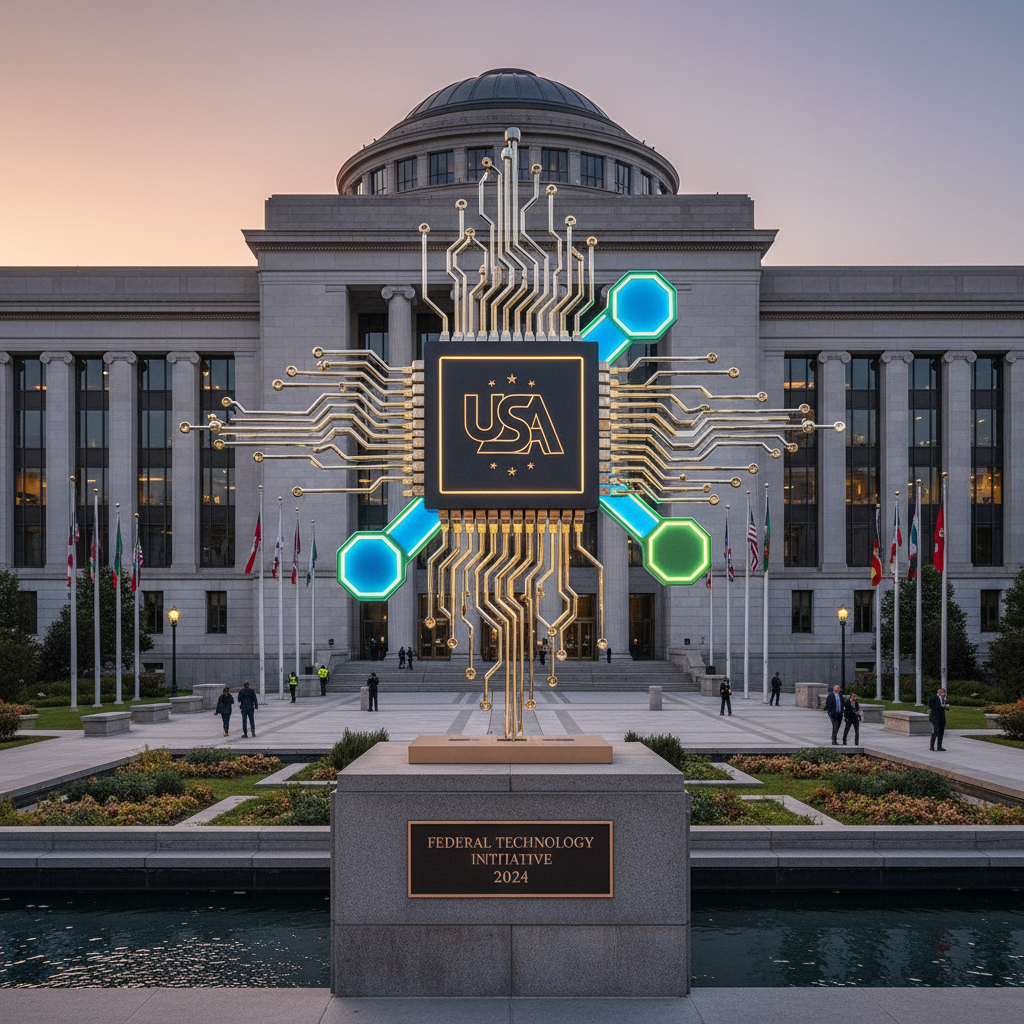
President Donald Trump has made the federal government Intel’s largest shareholder after ordering the purchase of 10% of the flagging American chipmaker, a move that has infuriated conservatives who usually support the president.
In a speech Thursday, Trump defended the move, which he has said is part of a plan to invest in American manufacturing, while critics charged it verged on socialism. “We’re making the United States rich, richer and richer,” Trump said, as he laid out a broader industrial policy.
That raised a question that many are asking. How much is too much for the government to own in private business? For a long time, one of the defining elements of socialism was government ownership of the means of production for the benefit of all. By that definition, Trump critics said, his actions in Intel are no different than in China or Russia.
“I am not doing anything like that, folks. Zero,” Trump said. “Intel is taking government money, we are changing it into a stock investment, so we own 10% of Intel. That is not socialism; that is called being smart.”
During his remarks, Trump teased a second investment in “another huge company.”
Trump has indeed pushed aside an orthodoxy about corporate ownership and government intervention that was central to modern conservative politics for decades. The result is that even as he said he was doing nothing like “those other countries,” Trump’s policy echoes what economists and politicians used to call industrial policy, a more hands-on approach in which the state charts and sometimes even finances a nation’s key industries.
“I hope I’m going to have many more cases like it,” Trump said.
That approach has caused many on the right to question whether the federal government was being dangerously interventionist. Trump’s former top economic adviser, Larry Kudlow, said on Fox Business that he was “very, very uncomfortable with that idea.”
Steve Moore, another of Trump’s informal advisers, was more direct. “I hate corporate welfare,” Moore said. “That’s privatization in reverse. We want the government to divest of assets, not buy assets. So terrible, one of the bad ideas that’s come out of this White House.”
Conservative magazine National Review also chimed in with an editorial titled “Government Shouldn’t Get Into the Chip Business.” Senator Thom Tillis (R., N.C.) said he was “deeply troubled” and saw the danger in creating “a semi-state-owned enterprise a la CCCP,” a reference to the old Soviet Union. Senator Rand Paul (R., Ky.) jumped on Twitter: “Wouldn’t the government owning part of Intel be a step toward socialism? Terrible idea.”
In a nod to the political optics of this move from a man who was a Democrat for a quarter century and has long had strong ties to Silicon Valley, Trump argued that this was an investment rather than a bailout. He said he converted almost $9 billion in grants — which he was contractually obligated to turn over to the company anyway because the funds were awarded under President Joe Biden’s bipartisan Chips Act — into government equity.
Trump then took credit for creating $10 billion to $11 billion in “immediate value for the taxpayers.” “Why are ‘stupid’ people unhappy with that?” he asked.
Intel, which last year was the target of China’s first known investment in an American company since the coronavirus pandemic, in a Securities and Exchange Commission filing, warned it “may experience difficulty in obtaining government grants in the future” and it will “cause a material adverse effect” on sales outside of the U.S., including Europe, China, and Japan. The filing said the purchase was also “subject to more regulation” by the company and could cause harm to it.
Intel had said it was cutting 15% of its workforce earlier this year. The company’s market value is $110 billion, although its shares are down by half since the start of 2024 and jumped by 4% in the hours after Trump’s announcement. The WSJ reported that Trump “ordered the resignation of Intel CEO Lip-Bu Tan this month, citing Tan’s past work for Chinese firms, only to relent after a meeting at the White House” on Thursday.
Trump appeared to have forgotten that one of the purported benefits of his equity deal was that it was all done at no cost to taxpayers or, if you prefer, without having to raise taxes. Howard Lutnick, Commerce secretary, defended the move, telling Laura Ingraham of Fox News: “That is not socialism. That’s the best businessman in the United States of America in the Oval Office doing fair things for us.”
The U.S. government, which is a non-voting shareholder and vowed not to interfere in Intel’s operations, is now Intel’s biggest backer with a 9.9% stake in the chipmaker, according to a filing with the Securities and Exchange Commission. Shares of Intel stock declined by 3.6% to $38.05 on Thursday in the run-up to Trump’s announcement.
At this point, Trump has said he will use his authority under the Chips Act to make these sorts of deals with several major American companies to help revive American manufacturing and the struggling chip industry. Critics are already lining up to say this is socialism, or it at least could lead to socialism.
What is clear is that as the 2024 election campaign kicks into gear, Trump and Biden are heading in different directions, with the former Florida governor leading the charge. And after Thursday, the most interesting race is likely to be between Trump and Sanders as to which of them can claim to have turned the Democrats back into socialists.