
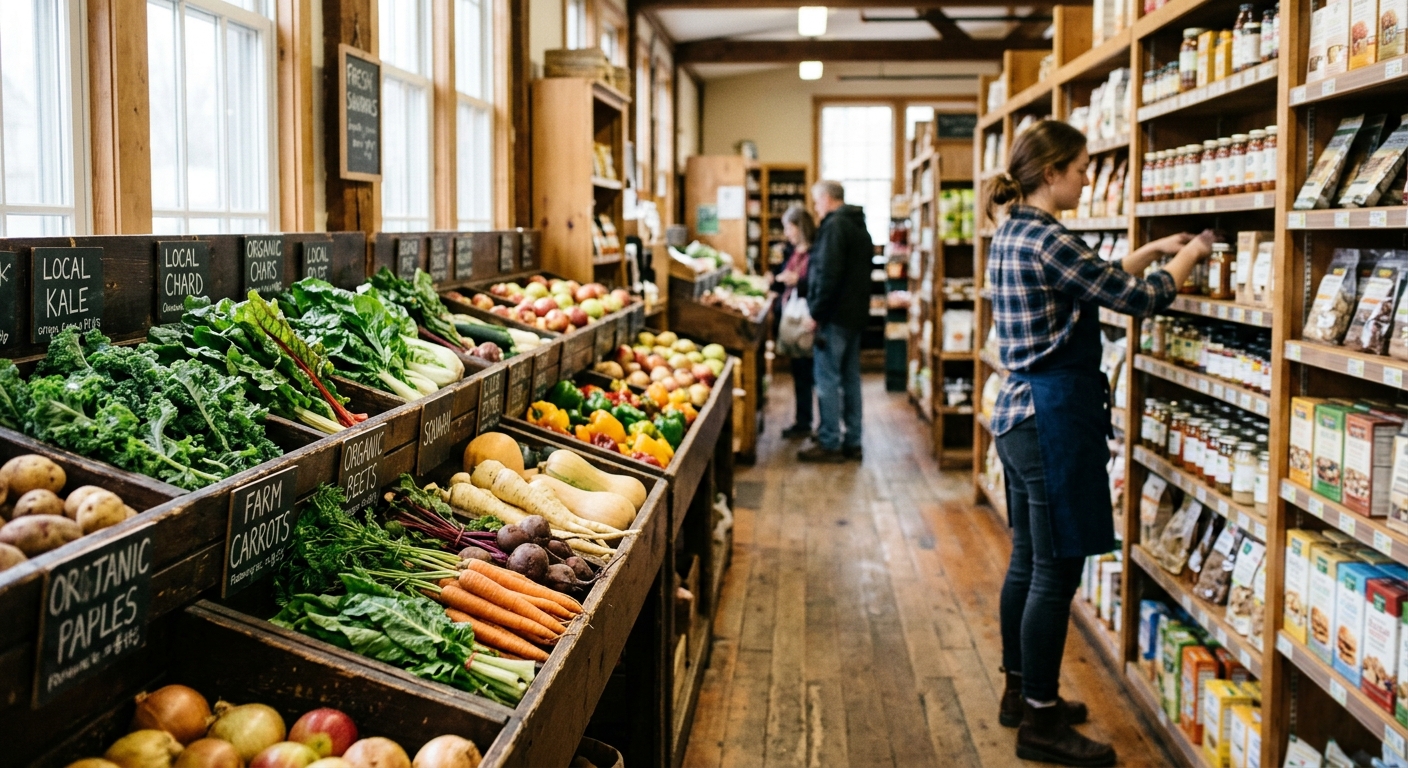
AI-generated illustration; not a photograph of the reported event.
- calendar_today October 31, 2026
Historic Roots: The Cooperative Spirit
The Hanover Consumer Cooperative Society, widely known as "the co-op," has its origins in the Great Depression when 17 neighbors in Hanover, New Hampshire and Norwich, Vermont, pooled resources to source affordable food staples. Nearly a century later, this locally driven initiative has evolved into the second-oldest and second-largest consumer grocery cooperative in the nation, boasting over 35,000 voting members, three grocery stores—including one in Vermont—two auto service centers, and a commissary kitchen.
The Challenge of Rising Food and Grocery Prices
The co-op now faces a significant economic challenge: steep increases in food prices. According to the U.S. Bureau of Labor Statistics, grocery prices have risen by about 31% since March 2020. Amanda Charland, the co-op’s CEO, notes the persistent difficulty since the pandemic: "Right now the price of food has been really tough to keep up with. It’s also really tough for us to continue to try to meet our mission and our values, because we are trying to give food at the lowest prices possible while competing with megalithic companies that have these massive supply chains."
Competition and Supply Chain Pressures
Unlike chain grocers, the co-op does not participate in common industry practices like slotting fees, where companies pay for premium shelf space. “We are not here for our vendors. We’re here for our customers,” Charland explains, emphasizing community ownership and values-driven service. The co-op partners with over 400 local vendors and sources significant products from regional farms and businesses.
Fuel Surcharges and Inflation Impact Operations
Another obstacle for the co-op is rising fuel surcharges, with national average diesel prices reaching $6.35 per gallon as of late October 2026, a $2.63 increase from the previous year. Charland describes how fluctuating fuel costs can dramatically impact operational expenses, especially for products with pre-set prices. “If you don’t get that price changed quickly, you’re selling at a loss. But you don’t want to pass a lot of that to the consumer. It’s just hard for everybody, and shoppers are looking for lower and lower prices.”
With the annual inflation rate at 3.7% as of September, thin grocery profit margins leave little room for unforeseen costs. The co-op allocates roughly 70% of each dollar to product costs, 25% to employees, and the remaining 5% to operational expenses such as electricity and insurance.
Investing in Employees and Community
The cooperative strives to provide competitive employee benefits, including health insurance, a 401(k) with employer match, and zero-interest auto repair loans through its service centers. Still, rising expenses challenge both compensation and the co-op’s ability to keep grocery prices low for its member-owners. “I wish we could do more, but that’s why we try to invest in a lot of benefits for our people,” Charland says.
Pioneering Sustainability Initiatives
The co-op is committed to environmental stewardship, an area prioritized by Charland since she started as sustainability coordinator 15 years ago. The organization currently diverts about 70% of its food waste from landfill, first redistributing food through partner organizations such as Willing Hands to ensure as much as possible goes to feeding people. Food no longer suitable for human consumption is provided to local pig farms, with the remainder composted. The co-op aims for a 90% diversion rate to become a true zero-waste company.
Infrastructure improvements include shifting commissary refrigeration to climate-friendly carbon dioxide systems, reducing greenhouse gas emissions compared to hydrofluorocarbon-based refrigeration. “CO2 refrigerants are one of the best refrigerants you can get. We hope that we can start to roll this technology out in other stores as we need to replace old systems,” Charland notes.
A Community Built Around Co-op Values
For many shoppers, the co-op’s commitment to local economic support and community investment is paramount. Longtime customer Gayle Giovanna says, “I come back because I’d rather have the money stay here in the local economy than go off to who knows where.” Bruce Follett, who has been with the co-op for 27 years, underscores the staff’s dedication to each other and the community.
Despite financial pressures from inflation, fuel costs, and other expenses, the Hanover Consumer Cooperative Society continues to focus on affordable groceries, sustainability, robust employee benefits, and partnerships with local vendors—spotlighting the enduring value of the community cooperative model.
Source: vtdigger.org.


